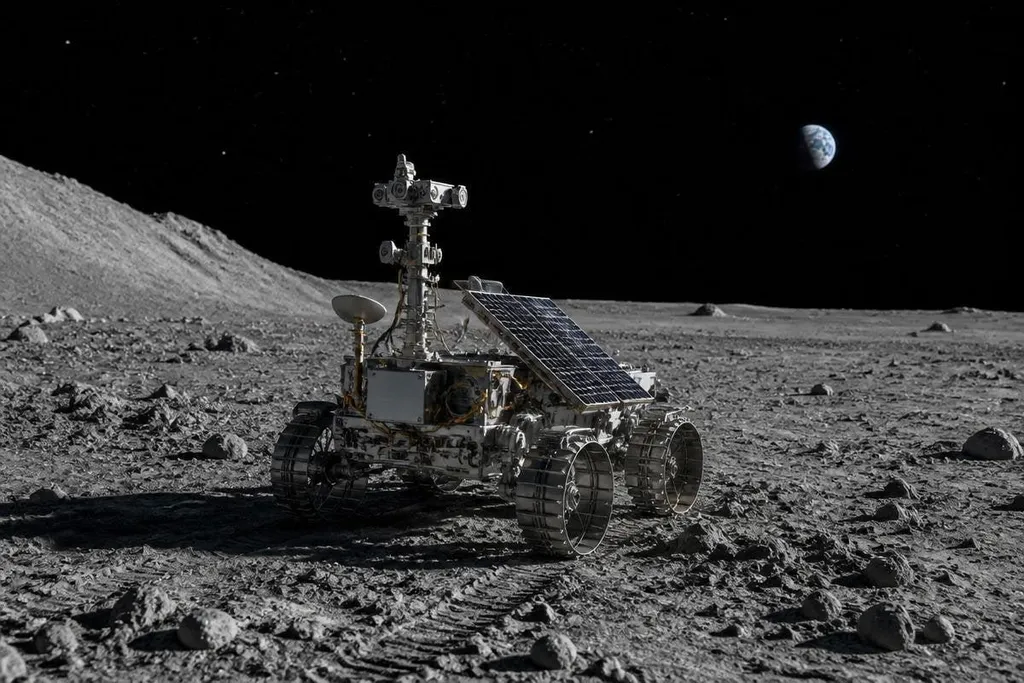
A lunar rover faces vacuum, abrasive dust, low gravity, and long periods without sunlight. Those conditions shape every part of the vehicle, from its wheels and batteries to the software that decides where it can drive.
The useful question is how much work a rover can complete before people need to intervene. Distance matters, but a long drive means little if the vehicle cannot inspect ground, manage power, or recover from a fault.
Quick read
- Lunar dust can wear down seals, joints, cameras, and wheel parts.
- Solar power falls during the lunar night, so the rover needs stored energy or a safe shutdown plan.
- Autonomous driving matters when a rover must react before a command from Earth can arrive.
The surface sets the rules
Moon dust is made from sharp, broken material. It can cling to surfaces, enter moving parts, and cover optical sensors. A rover built for clean test rooms may struggle when dust reaches its wheel hubs or camera covers.
The wheels face a second problem. Low gravity reduces the force pressing them into the ground, while loose soil can let them spin without moving the rover forward. Wheel design, suspension travel, and software that detects slip all affect whether the vehicle can leave a shallow rut.
The vehicle also needs a way to inspect the ground before it commits to a route. Stereo cameras, laser sensors, or other depth tools can build a local map. The rover then compares that map with its drive limits and picks a safe path around rocks, slopes, and soft soil.
Why autonomy matters
A rover on the Moon cannot depend on a person watching every wheel turn. Radio communication takes time, and the vehicle may lose contact when terrain blocks the signal or the rover moves out of view of a relay.
Autonomous driving gives the rover a small set of local decisions. It can slow down near a slope and stop when a wheel slips. When its sensors disagree, the rover can wait for a new route instead of continuing into unknown ground.
That does not make the rover independent in the human sense. The software handles the next few metres without asking for a command at every step.
The hard part is knowing when the software should stop. A safe rover needs clear limits for slope angle, wheel slip, battery charge, sensor failure, and loss of communication. A cautious stop may cost travel time, but a stuck rover may need a recovery plan nobody can carry out from Earth.
Those stop rules also need a clear record of the rover, test site, and software version. Lunar rover reports from Robot24.com can tie each claim to those details before the next section asks how much power the rover has for work.
Power decides the work plan
Solar panels can charge a rover when sunlight reaches them, but lunar darkness creates a long gap in power input. A design must store enough energy for heating, computing, communication, and movement, or reach a safe location before the light disappears.
Heat matters as much as energy. The rover operates in a vacuum, so it cannot lose heat through moving air. Its electronics need insulation, heaters, radiators, and a layout that keeps sensitive parts within their working temperature range.
This limits the daily plan. A rover may need to spend its available sunlight on charging and travel, then shut down most functions during darkness. The choice depends on its battery, heater load, solar position, and the length of the planned route.
What a useful lunar rover must show
A working vehicle needs more than a drive video. Engineers need evidence that the machine can repeat its job after dust exposure, wheel slip, sensor faults, and temperature changes.
I’d judge a lunar rover by its recovery rules before its top speed. A rover that stops safely, reports the problem, and waits for a new plan may finish more useful work than a faster vehicle that becomes stuck after one bad turn.
Practical checks before backing a mission
Use these points when judging a proposed rover or mission plan:
- Check the drive surface: Look for tests on loose soil, slopes, rocks, and wheel slip.
- Check dust control: Ask how seals, joints, cameras, and radiators handle lunar dust.
- Check the power plan: Find out what happens when sunlight ends or charging falls short.
- Check local decisions: Look for rules that stop the rover after a sensor fault or loss of contact.
- Check recovery options: Ask whether people can change the route, restart software, or free a trapped wheel.
The next useful lunar rover will be the one with a clear work plan for bad conditions. Until a design shows safe driving, dust control, power survival, and recovery in tests that match the Moon, its range remains a promise rather than a result.